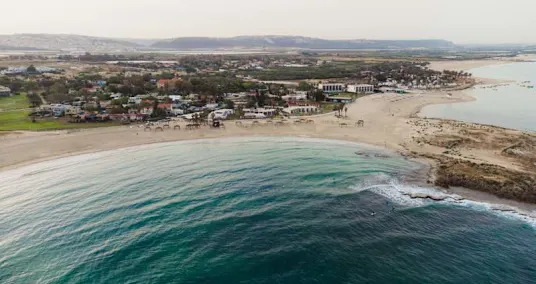
The discovery was made in an ancient shipwreck in the Dor Lagoon near the Carmel Coast, where archaeologists recovered nine pieces of unprocessed iron known as “blooms.”
Researchers from the University of Haifa said Wednesday that an underwater excavation off Israel’s northern Mediterranean coast uncovered what they described as the earliest known cargo of raw iron transported by ship, dating back around 2,600 years, Xinhua reported.
The discovery was made in an ancient shipwreck in the Dor Lagoon near the Carmel Coast, where archaeologists recovered nine pieces of unprocessed iron known as “blooms.” According to the university, the find provides direct evidence of how iron was transported in its earliest commercial stages.
The material was preserved in its original form, having solidified directly in a smelting furnace without undergoing forging or further refinement. Researchers said this distinguishes the cargo from later iron artifacts that typically show signs of shaping or tool-making.
Unlike copper and bronze, which could be melted into liquid form in ancient production processes, iron was heated with charcoal to produce a solid, porous mass. That mass was generally hammered to remove impurities and create denser material suitable for tools and implements.
The recovered blooms showed no indication of that secondary processing stage, suggesting they were transported immediately after production.

Earliest iron shipment discovered in ancient Mediterranean wreck
To determine the age and condition of the cargo, researchers conducted microscopic and chemical analyses.
Radiocarbon dating was also carried out on charred wood embedded in one of the pieces, helping confirm the timeline of the shipment. The findings were published in the journal Heritage Science.
Researchers said the cargo indicates that iron was being moved in raw form from production sites to other locations for further processing, pointing to a level of specialization in ancient manufacturing and trade networks in the Mediterranean.
The University of Haifa said the discovery provides new insight into early iron production and distribution practices in the region.
latest_posts
- 1
 The Difficulties of Getting a Green Card in the US
 - 2Tesla Germany Registrations Quadruple to 9,252 Vehicles in Best March Ever
- 3Ukrainian troops showed 'greater tactical imagination' than Western trainers, British officer says, pointing to their ambush tactics
- 4Airbnb Unveils Airport Pickup Service Across 125 Cities in Global Expansion
- 5Careful Nurturing: Techniques for Bringing up Tough Children



- Several injured as man threatens attack on German high-speed train
- Euclid space telescope sees gorgeous cosmic cloud | Space photo of the day for Nov. 18, 2025
- 5 VIP Voice Exhibitions in Energized Movies
- What to know about new CDC deputy director who has been critical of COVID vaccines
- Instructions to Pick the Ideal SUV Size for Seniors
- What exactly is the Upside Down in 'Stranger Things'? The wormhole revelation, explained.
- Role reversal: Ukraine moves training home and exports the lessons abroad
- NASA releases stunning first images of Earth taken by the Artemis II astronauts
- Intriguing Strange Cruising Objections you Should Visit